
Problem
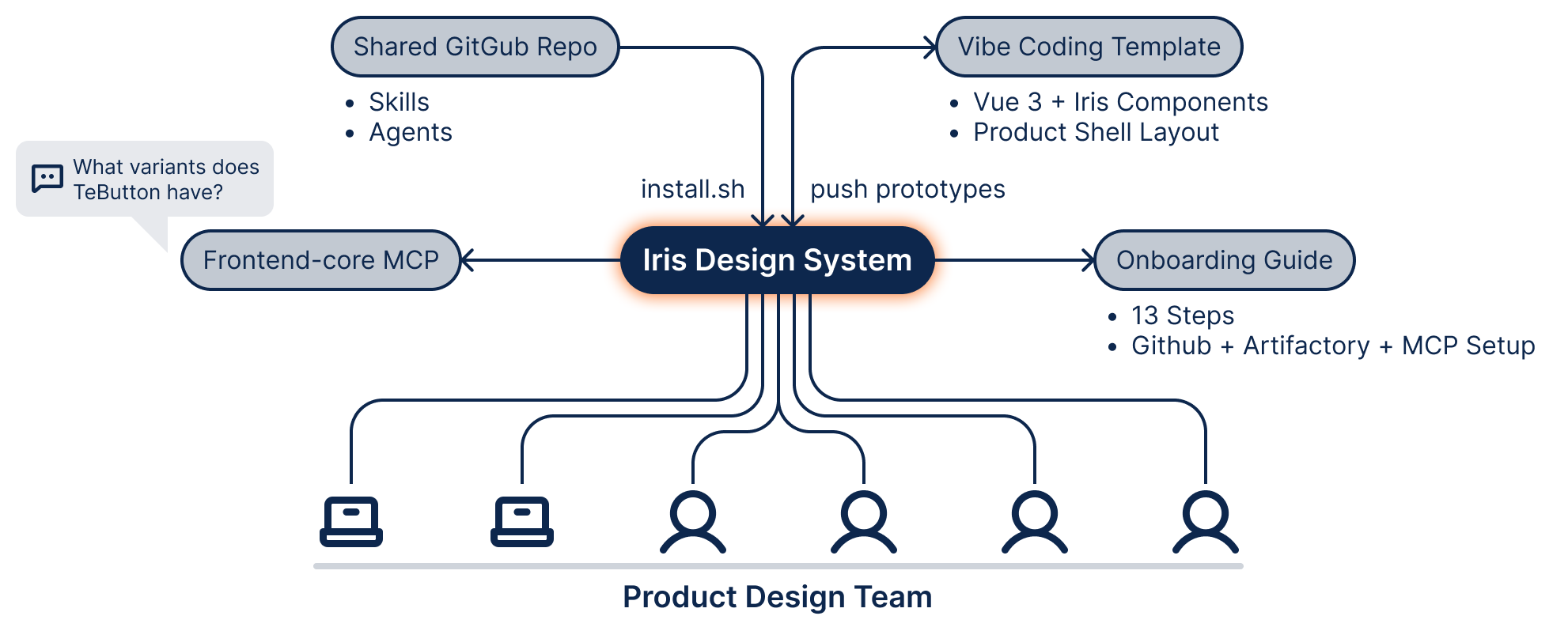
Design systems teams typically maintain a component library and documentation. But between releases, the knowledge lives in scattered places — Confluence pages, Figma files, Storybook, and tribal memory. When the team adopted AI coding assistants, a gap appeared: the AI tools had no connection to our design system, and designers had no way to set them up.
The result was isolation. Each designer was on their own — configuring tools from scratch, asking the same questions the AI couldn’t answer, and unable to prototype with real components without access to engineering repos. There was no shared knowledge, no shared process, and no shared starting point.
The design system was already the team’s shared language for components. The question was whether it could also become the foundation for shared tools and workflows.
Process
Discovery
Define
Design
git pull. No manual file copying, no version drift.@te/iris, @te/iris-charts, @te/iris-tokens-and-styles) and ships with a standard ThousandEyes product shell — global header, left navigation, page layout. The router auto-discovers project folders, so a designer drops in a folder, adds an App.vue, and starts building. Finished prototypes live in the shared repo, runnable by anyone on the team.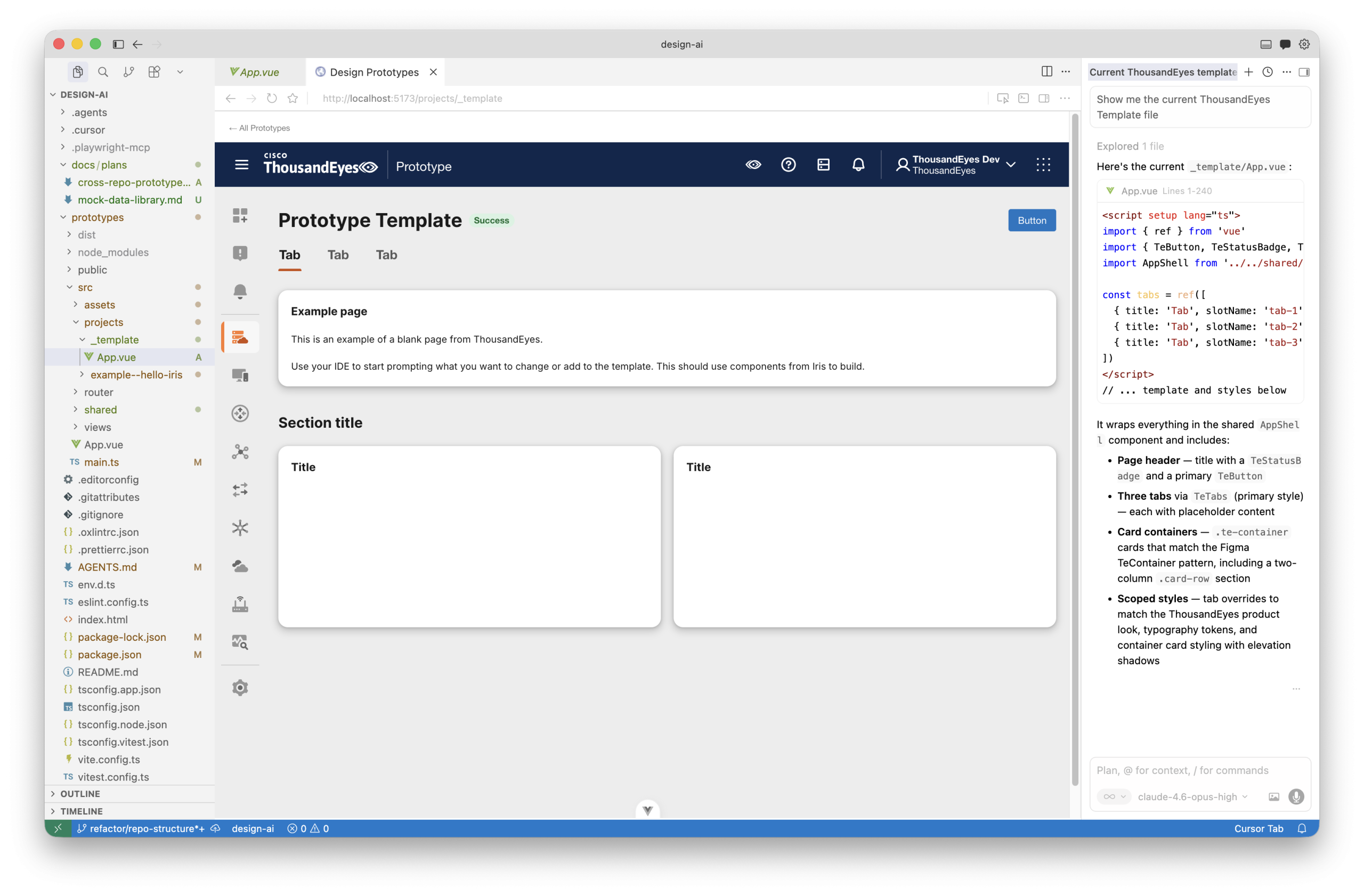
Validate
Deliver
My Role
-
Initiated the entire effort — this was not assigned; I identified the gap and proposed the approach
-
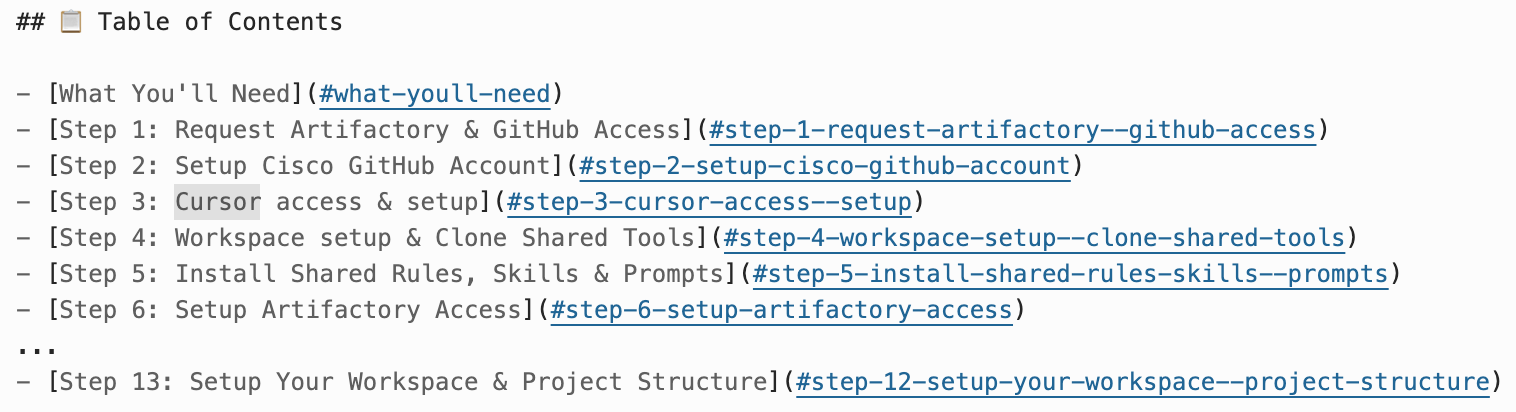
Built the 12-step onboarding guide — from GitHub access to MCP configuration, assuming zero terminal experience
-
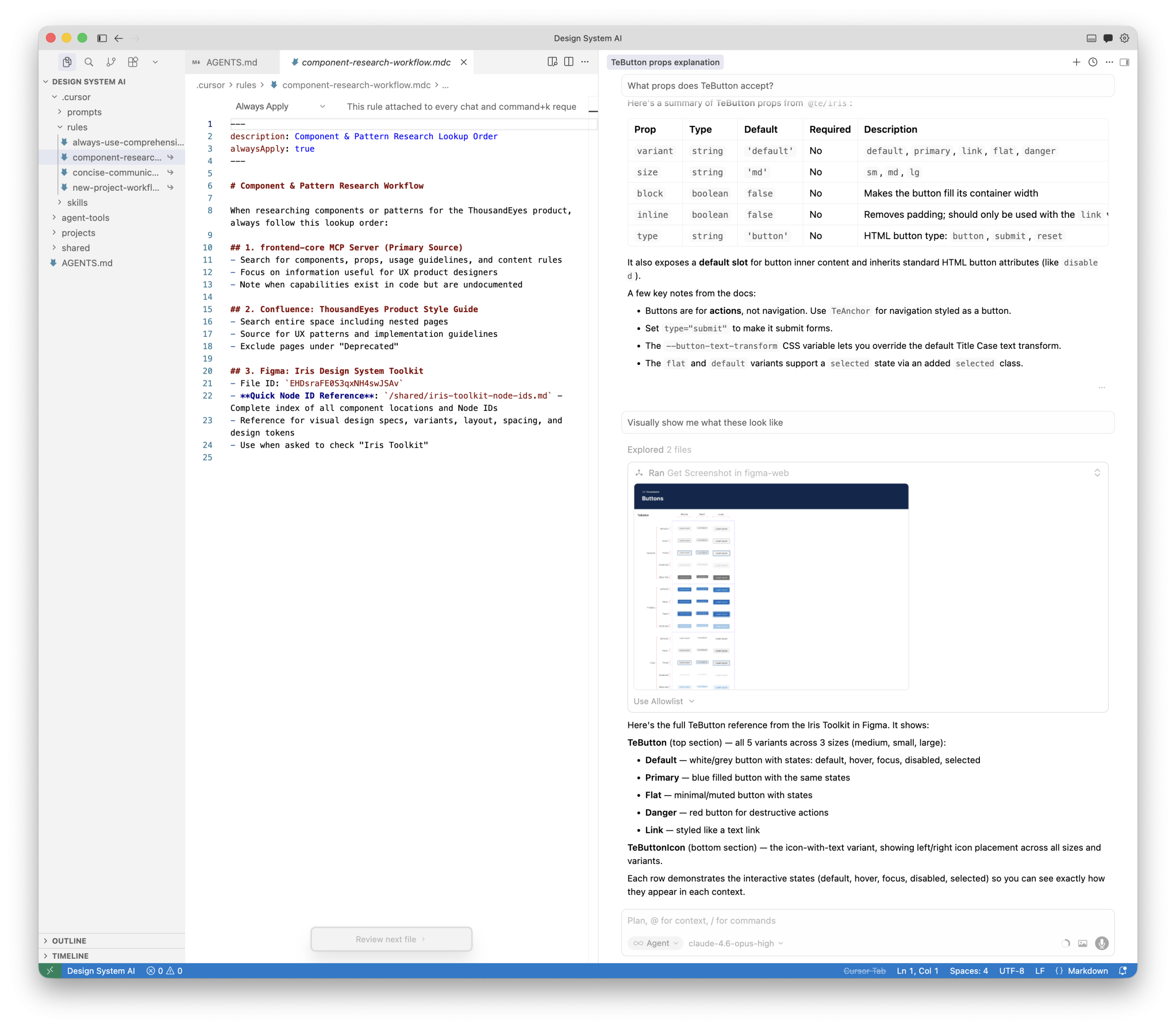
Designed the shared repo architecture — install script, symlink distribution, auto-syncing rules and skills across the team
-
Wrote the MCP and context education material — building the mental model designers needed to improve their own workflows
-
Created the vibe coding template — Vue 3 environment with real Iris components and a product shell, so prototypes start from real product context
-
Ran every onboarding session — observed friction points and iterated the guide based on direct feedback
Outcome & Impact
-
Established a model where the design system serves as the foundation not just for UI consistency, but for team tooling, shared knowledge, and collaborative workflows
- Every product designer onboarded to AI tools with direct access to the Iris Design System through natural language queries
-
Shared GitHub repo distributing rules, skills, and prompts across the team — new tools appear automatically after a pull
- Vibe coding environment using real Iris components, enabling designers to build and share interactive prototypes without engineering repo access
Reflection