
Greenhouse Mobile Banking
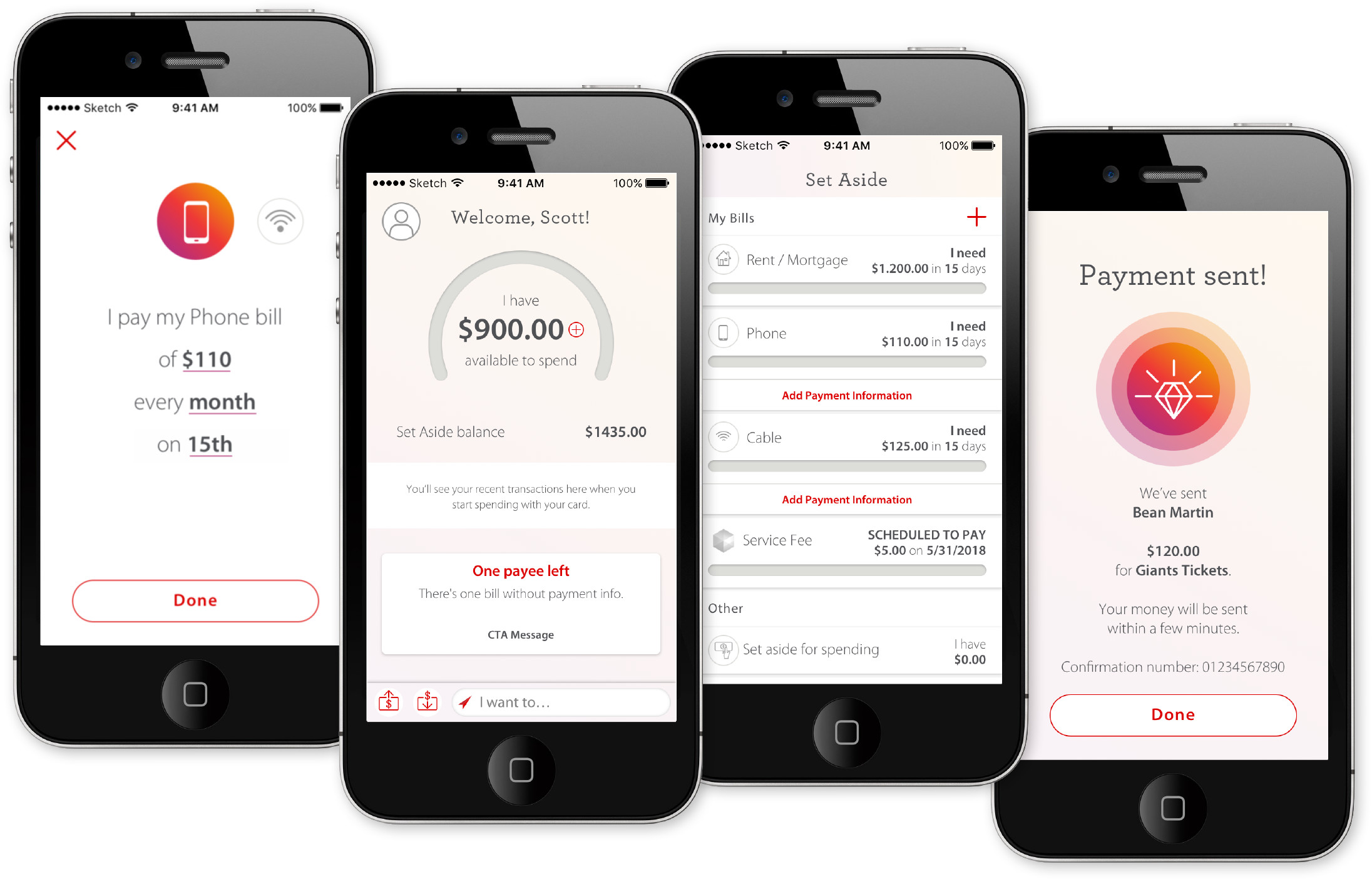
Greenhouse launched in Q4 2018 as a mobile-only banking product from Wells Fargo’s Innovation Group — and it was the kind of project that doesn’t happen often: a genuinely new product, built from scratch, with a team small enough that every designer’s decisions shaped what shipped.
I joined as one of three designers after the initial MVP was designed and early code was in development. My role was to help get the app ready for its first public release — designing new features, improving existing ones, and working through the edge cases and real-world constraints that surface when a product moves from concept to production. The team included developers, product managers, content strategists, and an accessibility specialist. The app launched fully ADA approved.
Project Details
Client Wells Fargo Innovation Group
Timeline 9 months
My Role Lead Mobile Interaction Designer
Team 2 additional designers, developers, product managers, content strategist, accessibility
My Contribution Interaction design for key user flows — money transfers, payee management, authentication, and screen transitions — through to first public release.
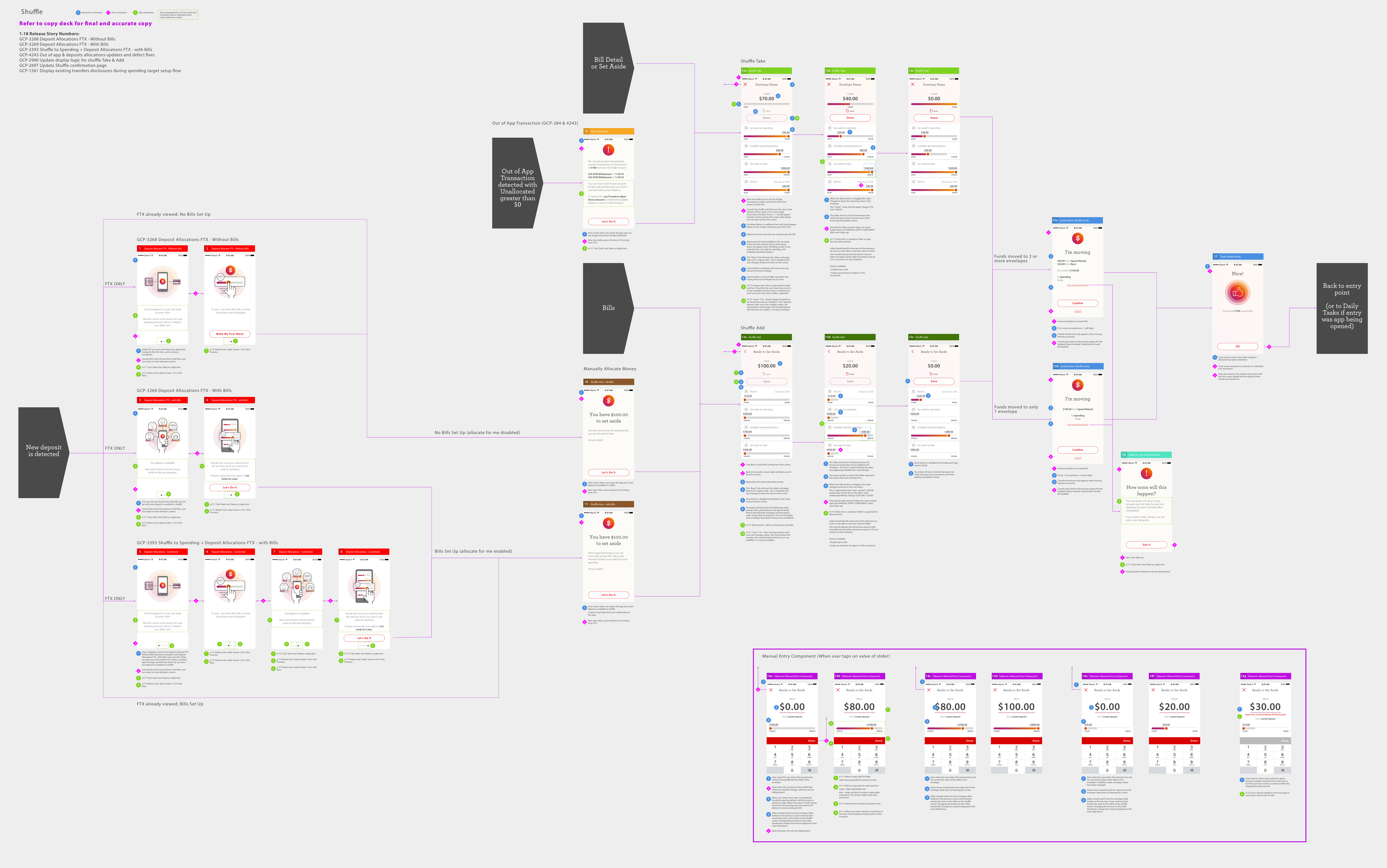
Transferring money between accounts
With regular user testing, I was able to see the problem areas, including the understanding of what the two different accounts are.
I also created a functionality where the slider is also a form field. As I observed most users just grab and throw a slider all the way to one side, the slider works great for them, but others may want to enter a specific amount, so for them, they could press on the number over the slider, which would animate into an expanded panel where the user could type in a value. We also had to make this functionality work for screen readers on iOS devices, which presented a challenge (swipe up and down for 10% increments, left and right for precise increments).
Adding payees

Adding a company or person as a payee is a process users approach with dread — high friction, often unclear, with consequences if something goes wrong.
For paying people, we leveraged what users already had: contacts from their phone and their history of previously sent payments. For paying companies, we built access to a company database with a search flow designed to minimize manual entry, plus support for e-bill delivery for companies set up to send billing directly.
The feature I wanted but had to defer: scanning a bill to auto-populate the payee details. That went on the roadmap for a future release.
Authentication
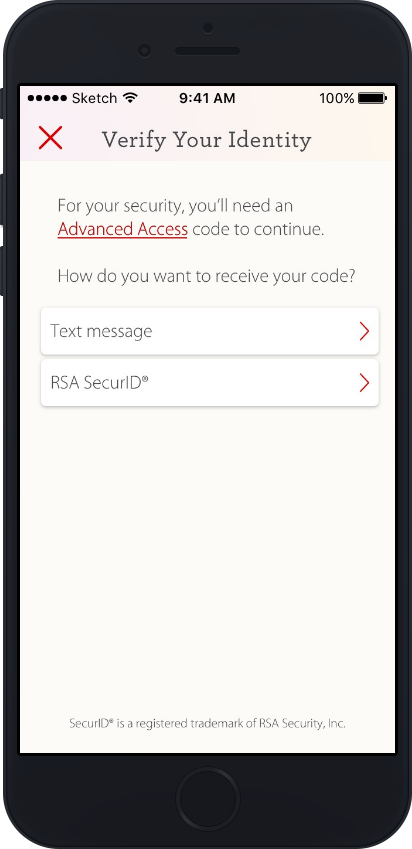
Sign-on and sign-off are the first and last interactions a user has with an app — and they’re frequently under-designed. For Greenhouse, this flow had both legal requirements from the compliance team and user experience requirements that sometimes pulled in opposite directions.
The design needed to accommodate standard credential login, Touch ID, and Face ID, while also gracefully handling edge cases: closed accounts, system outages, and varying account status states. Each edge case needed a clear, non-alarming resolution — mobile banking users already have an elevated anxiety threshold when something looks wrong.

Screen transitions
Transition design is often treated as decoration. On Greenhouse, I treated it as navigation — the way a screen enters or exits tells users where they are in a flow and whether they’re going deeper or returning.
With a development team already stretched thin, I made the deliberate decision to use default iOS transitions throughout the initial release rather than introduce custom animations that would create additional engineering work at a critical moment. The InVision prototype (linked in the exhibit) shows how those default transitions were applied to communicate the flow hierarchy to developers.
The custom transition plan — including animation, 3D touch, and haptic feedback — was documented and deferred to a later release, not abandoned.
Conclusion
Greenhouse launched in Q4 2018. The launch was received positively by Wells Fargo and the broader financial technology community — a meaningful signal for a brand-new mobile banking product in a risk-averse industry.
The work I contributed — money transfer interactions, payee flows, authentication, and transition design — shipped in that release, fully ADA approved and production-ready.